

Notifications
Clear all
Page 1 / 2
Next

Mazda 3 / Mazda 5 TCM Post-Repair Guide
Applies to: Mazda 3 (2006–2014), Mazda 5 (2007–2015)
Use this guide if you reinstalled your repaired Mazda 3 / Mazda 5 TCM and the problem is still happening. Please do not open or disassemble the module. Opening the module can damage it and may void warranty.
IMPORTANT — READ FIRST
Three codes account for the majority of post-repair concerns on this platform: P0791/P0793 (Intermediate Sensor), P0715/P0717 (Input/Turbine Speed Sensor), and P0745 (Pressure Control Solenoid “A”). Each is covered in detail below. Please complete the relevant verification steps before requesting an RMA label.
P0791 / P0793 — Intermediate Sensor Circuit
Required before RMA review. P0791 and P0793 point to the Intermediate Sensor, not the Input/Turbine Speed Sensor. These are two different sensors on the same transmission and they are tested in different ways. Please confirm which sensor you have before testing.
Step 1 — Identify your sensor by wire count
At the sensor connector, count the number of wires:
- 2-wire sensor — this is the Input/Turbine Speed Sensor. Wrong sensor for P0791/P0793. If you tested a 2-wire sensor with an ohmmeter and got a value in the 250–600 Ω range, that result does not apply to this code. Locate the 3-wire sensor on the transmission and test that one instead.
- 3-wire sensor — this is the Intermediate Sensor. Correct sensor for P0791/P0793. Continue to Step 2.
Step 2 — Test the 3-wire intermediate sensor circuit
The intermediate sensor is an active (Hall-effect) sensor. It receives power, a ground, and outputs a signal. A resistance check across its terminals is not a valid test. Use a voltmeter and continuity tester with the sensor disconnected.
- Power check — With ignition ON (engine off), probe the power wire at the sensor connector (harness side) to ground. Expected: approximately 12 V (battery voltage). If 0 V, inspect the AT main relay and the power feed wiring back to the relay.
- Ground check — With ignition OFF, check continuity between the ground wire at the sensor connector (harness side) and the vehicle chassis. Expected: continuity (under 5 Ω). If open, repair the ground wiring.
- Signal wire integrity — Check continuity between the signal wire at the sensor connector and TCM connector terminal AC (with both connectors disconnected). Expected: continuity. Also check that this wire is not shorted to ground or to the power wire.
- Connector inspection — Inspect both the sensor connector and the TCM connector for bent pins, pushed-back pins, corrosion, water/fluid intrusion, and pin tension. A loose female terminal will pass continuity but drop the signal under vibration.
Step 3 — Confirm the code is actively setting (not stored history)
P0791 only sets when ALL of the following are true for 4.5 seconds or more:
- Transmission in Drive (D) range
- Engine coolant temperature 140°F (60°C) or higher
- Engine speed 500 RPM or more
- Vehicle speed 25 mph (40 km/h) or more
If the code has only been observed while idling or parked, it may be a stored history code from before the TCM repair, not an actively re-setting fault. Please:
- Clear all codes
- Drive the vehicle for at least 10 minutes at normal road speeds with the engine fully warmed up
- Rescan for codes
If P0791 does not return as a confirmed code, no further action is needed.
Reply with what was checked
When requesting an RMA, please tell us: (1) was the tested sensor 2-wire or 3-wire, (2) the power, ground, and signal-wire test results from Step 2, and (3) whether the code is actively setting after a 10+ minute drive cycle.
P0715 / P0717 — Input/Turbine Speed Sensor Circuit
Required before RMA review. P0715 and P0717 point to the Input/Turbine Speed Sensor (2-wire passive sensor). This is a different sensor from the Intermediate Sensor covered above.
Test procedure
- Verify it is a 2-wire sensor. If the sensor has 3 wires, you have the wrong sensor — see the P0791/P0793 section above.
- Resistance check — With the sensor disconnected, measure resistance across the sensor terminals. Expected: 250–600 Ω at normal ATF temperature.
- Out-of-spec readings: open (OL) or near 0 Ω indicates a failed sensor. Replace the sensor before requesting an RMA.
- Wiring/connector inspection — Inspect for bent pins, fluid intrusion, corrosion, and chafed wiring between the sensor and the TCM. Verify continuity of both signal wires from the sensor connector to the TCM connector.
If the sensor and circuit verify good and P0715/P0717 still returns after a drive cycle, the issue is typically not the TCM. Common non-TCM causes include valve body wear, internal transmission harness degradation, and fluid aeration affecting sensor signal stability.
P0745 — Pressure Control Solenoid “A” Malfunction
Required before RMA review. P0745 reports on the pressure control solenoid “A”, which lives inside the transmission on the valve body. This code is almost always caused by conditions internal to the transmission — not by the TCM. Please complete the steps below before requesting an RMA.
Step 1 — Transmission fluid condition (critical)
Pressure control performance depends entirely on fluid condition. On higher-mileage vehicles this is the most common root cause of P0745.
- Fluid level must be correct. Use Mazda’s level-check procedure (no dipstick on most models — requires a level-set fitting with the trans at correct temperature).
- Fluid must be Mazda ATF M-V or equivalent. Wrong fluid type causes immediate pressure control issues.
- Fluid must not be dark, burnt-smelling, or contaminated with metal or clutch material. Burnt or contaminated fluid will reset this code even after a successful repair.
Step 2 — Solenoid resistance check
With the external transmission case connector disconnected, measure resistance across the pressure control solenoid “A” terminals at the trans-side connector.
- Expected resistance: 2.4–7.3 Ω (at normal ATF temperature)
- Open circuit or near 0 Ω indicates solenoid failure — this is an internal transmission repair, not a TCM repair.
- In spec but code still sets — continue to Step 3.
Step 3 — External connector and wiring
- Inspect the external transmission case connector for fluid intrusion. Fluid wicking up the wiring from a leaking connector is a very common cause of intermittent P0745 on these transmissions.
- Inspect for bent pins, corrosion, and pin tension at both the trans connector and the TCM connector.
- Verify continuity of both pressure control wires from the trans connector back to the TCM.
Step 4 — Mechanical considerations
High-mileage transmissions develop valve body wear that affects line pressure regardless of solenoid electrical condition. A worn valve body can produce P0745 even with a good solenoid, good wiring, and a good TCM. If fluid is past service life or visibly contaminated, the pressure control circuit may not function reliably regardless of any electronic repair.
Reply with what was checked
When requesting an RMA, please tell us: (1) fluid condition and service history, (2) solenoid resistance reading, and (3) external connector condition (any sign of fluid intrusion).
Other Common Questions
Transmission overheating
- Overheating is not typically TCM-related.
- Do not send the TCM back for overheating concerns.
- Check vehicle-side causes: fluid level/condition, cooler flow, restricted cooler lines, radiator/cooler issues, and related sensors.
Harsh shifts with no codes
- Before we can authorize an RMA label, confirm you scanned both PCM and TCM.
- Your scan tool must be capable of reading TCM codes and data, not PCM-only generic OBD-II.
Battery and Power Supply Verification
Before further diagnostics, verify:
- Battery voltage with engine off: 6 V or higher
- Charging voltage with engine running: 7–14.6 V
- Battery terminals are clean and tight
- Engine and chassis grounds are clean and secure
- No aftermarket accessories are spliced into TCM power or ground circuits
Low voltage or poor grounds can cause false transmission codes and communication issues.
Clear Codes and Perform a Road Test
- Clear all stored and pending diagnostic trouble codes
- Drive the vehicle until it reaches full operating temperature
- Perform normal acceleration, deceleration, and steady-speed driving
- Recheck for returning codes
Proceed based on which codes return as confirmed (not pending) codes.
Transmission Fluid and Filter Condition (Age-Related Check)
Due to the age of these vehicles, transmission fluid condition plays a critical role in proper sensor and solenoid operation.
Verify the following:
- Transmission fluid level is correct
- Fluid is not excessively dark or burnt
- No visible metal debris or excessive clutch material
- Transmission filter is not restricted
On higher-mileage vehicles, degraded fluid or a restricted filter can cause:
- Speed sensor signal instability
- Shift solenoid performance issues
- Harsh or delayed shifting
- Electronic fault codes that mimic TCM failure
Important: Fluid or filter-related issues are mechanical or hydraulic in nature. TCM repair or replacement will not correct these conditions.
No Communication or Network Codes (U0101)
If U0101 or related communication codes appear:
- Intermittently
- Alongside speed sensor or solenoid codes
- After successful TCM repair and reinstallation
Verify the following vehicle-side items:
- CAN bus resistance at the diagnostic connector (should read approximately 60 Ω between CAN-H and CAN-L)
- Ground reference integrity
- Transmission and body harness connector condition
- No aftermarket devices interfering with CAN communication
CAN driver failures inside the TCM are uncommon on this platform once repaired and verified.
When TCM Repair Is Appropriate
TCM repair or replacement is appropriate only when one or more of the following conditions are present:
- No communication with the TCM on the vehicle and on the bench
- Internal corrosion or physical damage
- Internal power supply failure
- Confirmed internal component failure during bench testing
If none of these conditions are present, the issue is likely vehicle-side.
Summary
- Battery, power, and grounds must be verified first.
- Transmission fluid and filter condition is critical on higher-mileage vehicles.
- P0791 / P0793 — Intermediate Sensor (3-wire, voltage-based testing). Not the same as the input speed sensor.
- P0715 / P0717 — Input/Turbine Speed Sensor (2-wire, 250–600 Ω resistance test).
- P0745 — Pressure Control Solenoid “A” (internal trans component, 2.4–7.3 Ω; fluid condition is the #1 root cause).
- Solenoid codes returning after solenoid replacement often indicate internal transmission concerns (valve body wear, harness degradation).
- This platform is sensitive to mechanical and hydraulic wear that can mimic electronic failure.
Final Note
This guide exists to help determine the correct repair path and avoid unnecessary repeat service. Vehicles of this age commonly experience mechanical and hydraulic wear that cannot be corrected electronically. If you have completed the relevant verification steps above and the issue persists with the TCM identified as the likely cause, please reply with your test results and we will assist with an RMA review.
This topic was modified 3 years ago 5 times by Ernest
This topic was modified 2 years ago 2 times by Ernest
This topic was modified 1 year ago 2 times by Ernest
This topic was modified 10 months ago 2 times by Ernest
This topic was modified 9 months ago 8 times by Ernest
This topic was modified 5 months ago by Ernest
Topic starter
Posted : 04/18/2022 10:32 pm

I had received the TCM part and installed. But the "AT" light on is still. There is a "M"(manual) light instead of "D"(drive) when transmission switch put on "D' slot. Also manual switch does not work at all!

Posted : 06/28/2022 1:03 am
What codes are you getting? Please reach out to our customer service so we can assist you further.
Topic starter
Posted : 06/29/2022 1:02 am

I apologize you're still having issues with your part! Could be that you have an active code. Please have your part scanned for codes and let Customer Support know what codes you are getting so they can create a support ticket and have a technician reach out. Make sure you have your order number ready when you call. 1-888-979-9343
Posted : 06/29/2022 1:05 am
I went to AutoZone and the report comes out the code is P0745-00 (PCA) and U0101-00.
Posted : 06/29/2022 1:12 am
Check or Repair damaged wiring or connectors.
Check or Repair ground connections.
Call costumer service if you still have issues. Have your order number ready and codes. They will create a support ticket
Posted : 06/29/2022 11:48 pm

2010 Mazda 3. Refurbished TCM just installed. Car will not turn over, just keeps cranking. Battery is strong.
Wiring harness attaches firmly. Battery then disconnected for 30 minutes. 15A TCM fuse is good. Any suggestions?
Posted : 12/02/2023 9:07 pm
What codes are you getting? If your car dont start it could be many other issues like bad starter or spark or even fuel pump . Scan for codes and post them here.
This post was modified 3 years ago 2 times by Serge - UpFix Team
Posted : 12/02/2023 10:47 pm

Order: 811589H Web:100382528
I’m still getting the following error codes after installing the repaired TCM/TCU:
P0732-FF Transmission gear #2 - incorrect ratio
P0733-FF Transmission gear #3 - incorrect ratio
P0734-FF Transmission gear #4 - incorrect ratio
P0744-FF TCC ( control circuit high)
U1900-A0 (CAN) Communication bus fault- receive error
Question:
Is it safe to do a whole transmission flush?…. I’m looking to do a transmission flush, change transmission filter and gasket to see if that fixes the issue.
Posted : 04/23/2024 11:44 pm
Looks like a mechanic had your vehicle with those exact codes. If those codes show up together it's possible that the transmission itself is faulty. It's not something you would like to hear but it's a possibility. You can check transmission fluid and filter and see how dark it is and if there is metal debris. However, the U1900 - if this code shows up while scanning the TCM for codes, it's possible that the TCM or the wiring is at fault. Since it's only been in here once, I'd recommend checking fluids, and filter, if needed, we can take another look under warranty at the TCM before blaming the transmission for going bad
https://forum.upfix.com/tcm/tcm-troubleshooting/
This post was modified 2 years ago 4 times by Serge - UpFix Team
Posted : 04/26/2024 1:52 pm

The image above for the pinout of the Mazda TCM Wiring Harness appears to be incorrect for my model.
I have 2010 Mazda 3 and there is no wire occupying pin 9 (Ground: X (Black)
Also pins 4 and 6 are not Power: I, O for this model.
Can you provide the correct pin outs for this model?
Thank you
Posted : 09/20/2024 5:56 pm
Please share a picture of your TCM including the plug. If yours an LF8M or LFJE TCM?
Topic starter
Posted : 09/20/2024 7:34 pm
The TCM is now repaired at your facility and waiting to be shipped to me.
I am attaching the picture of the TCM and also the connector.
Thanks
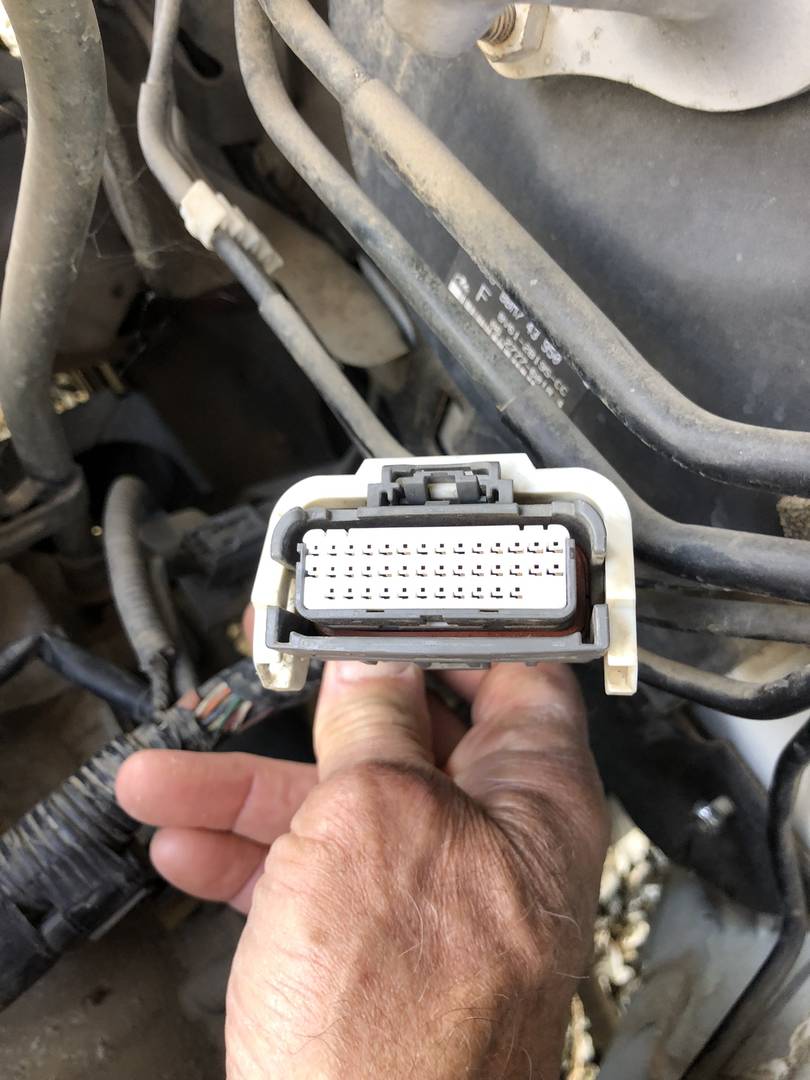
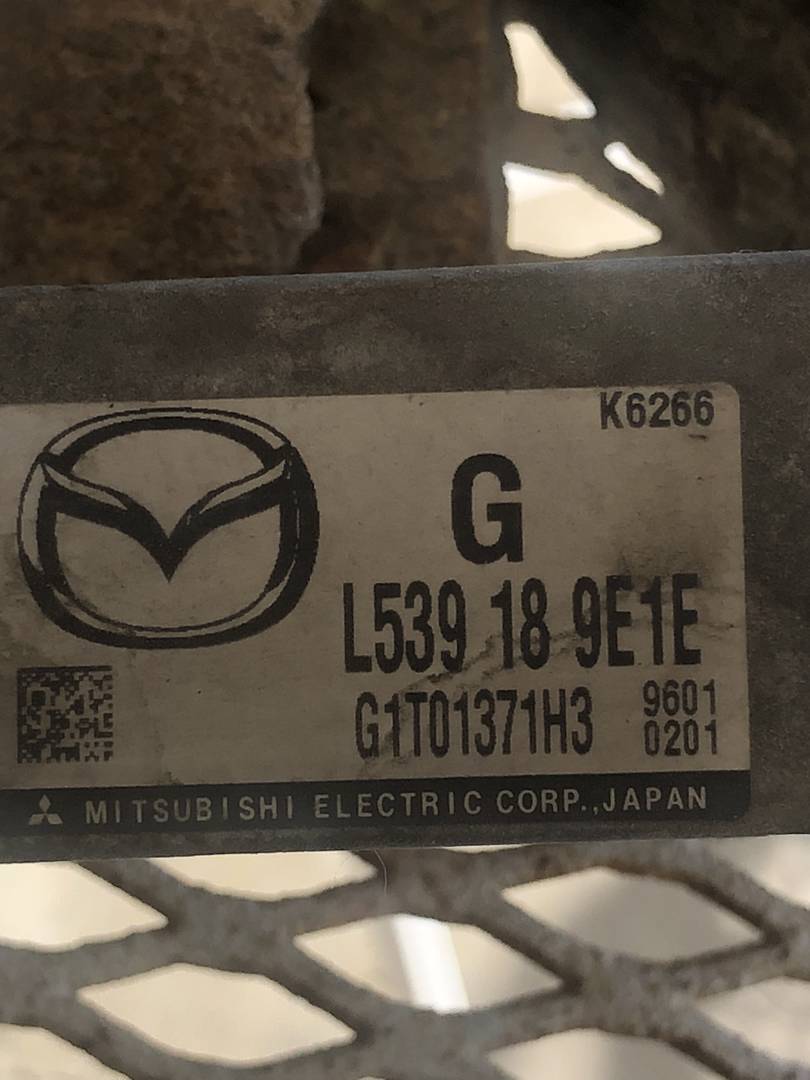
Posted : 09/20/2024 9:38 pm
The Pinout is correct. Rest assured when you receive your TCM back it should be plug-n-play. We use that pinout for the L539 as well.
Topic starter
Posted : 09/20/2024 10:09 pm
Please look at the backside of the TCM connector on this 2010 Mazda 3.
There is no wire present in pin #9.
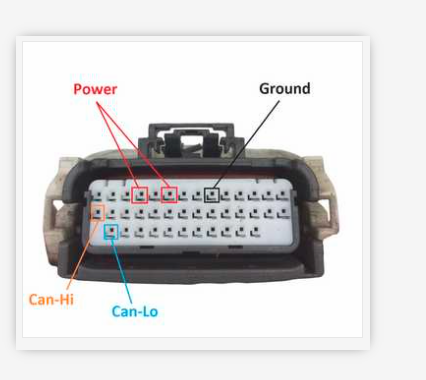
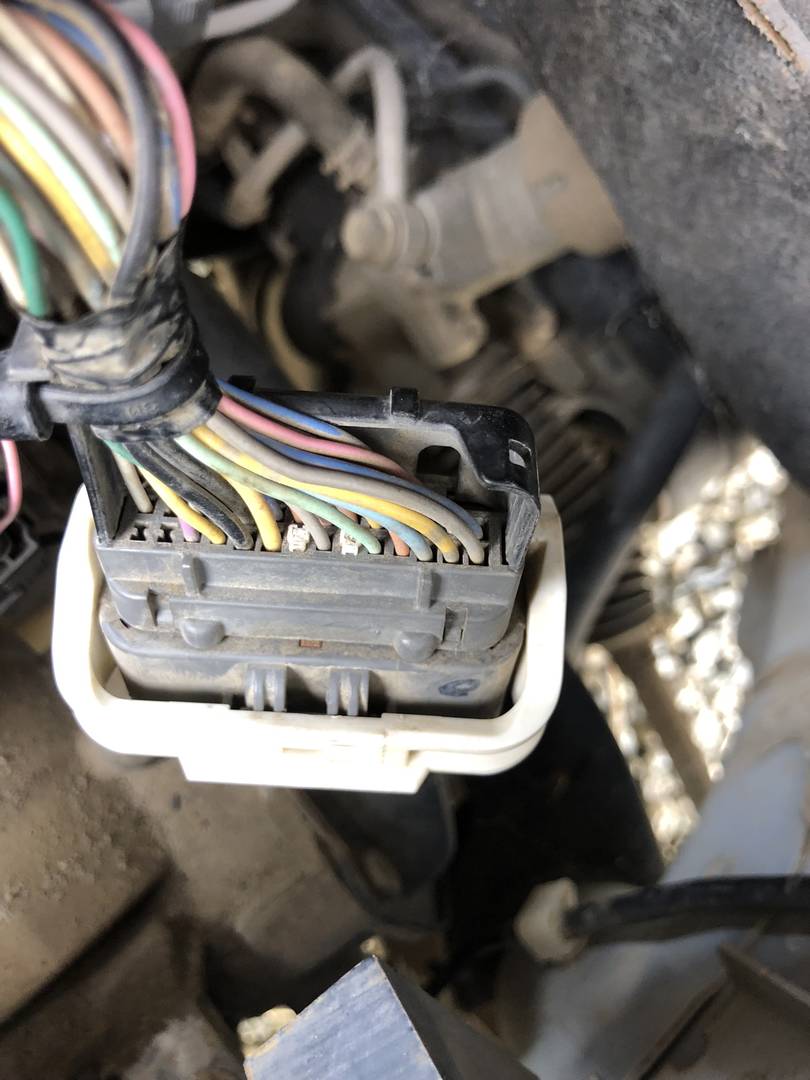
Posted : 09/21/2024 5:48 am
Page 1 / 2
Next